Microstructure patches vs traditional patches: what are the differences?
Cosmetic patches have become an essential tool in skincare routines. These easy-to-use devices allow active ingredients to be applied to specific areas of the face or body. The effectiveness of these patches largely depends on the technology used to deliver the active ingredients into the skin.
Importance of Active Ingredient Delivery Technologies
The technology behind patches plays a crucial role in their ability to deliver visible results. Advanced technologies enable better penetration of active ingredients and increased effectiveness. Among these innovations, microstructure patches stand out due to their unique delivery method.
In this article, we will compare microstructure patches with traditional patches. We will explore in detail the differences between these two types of patches, their respective modes of action, and their benefits for the skin. This comparison will help you understand which options are most suitable for your specific skincare needs.
What is a traditional patch?
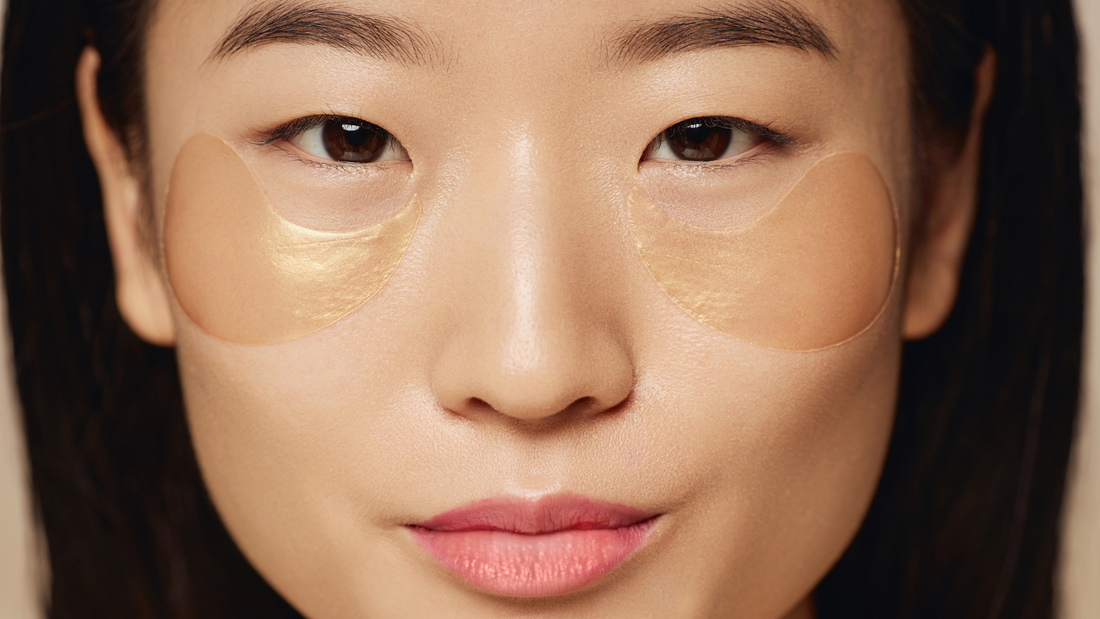
The traditional patch represents one of the most common forms of cutaneous application in cosmetics. Their operation relies on an adhesive matrix, often composed of flexible polymers, which holds the patch in place while containing the active ingredients in the form of a gel or solution.
- Mode of action: after application to the skin, the patch gradually releases its active ingredients through body heat and the skin's natural moisture.
- Diffusion of active ingredients: penetration remains limited to the superficial layers of the epidermis. Active molecules diffuse primarily on the surface or in the first skin layers, without effectively crossing the deeper skin barrier.
This type of diffusion makes traditional patches suitable for hydrating, soothing, or temporarily treating the targeted area, but their effectiveness largely depends on the type of active ingredient used and its intrinsic ability to penetrate the skin without advanced technological assistance.
Technology and operation of microstructure patches

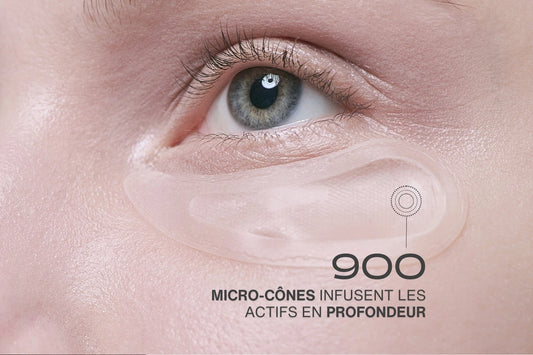
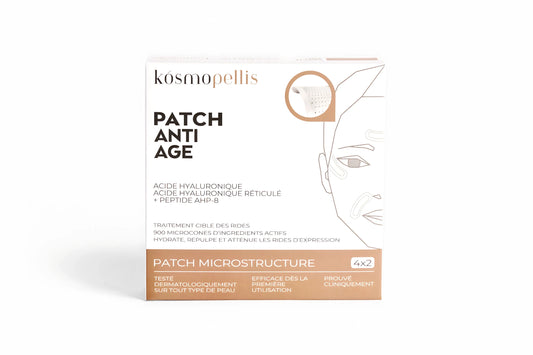
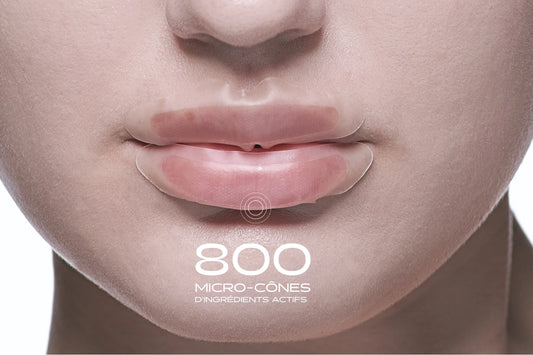
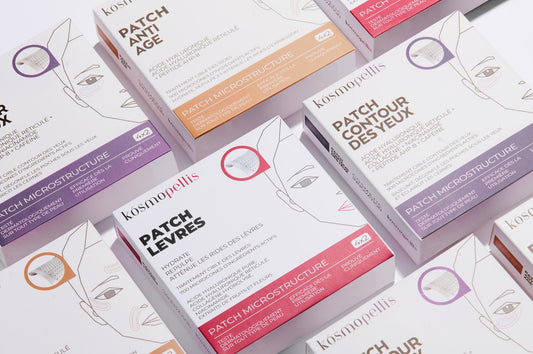
Kosmopellis microstructure patches stand out for their patented technology that uses micro-cones to deliver active ingredients deep into the skin. This advanced technology relies on the crystallization of active ingredients in the form of micro-cones. Here's how it works:
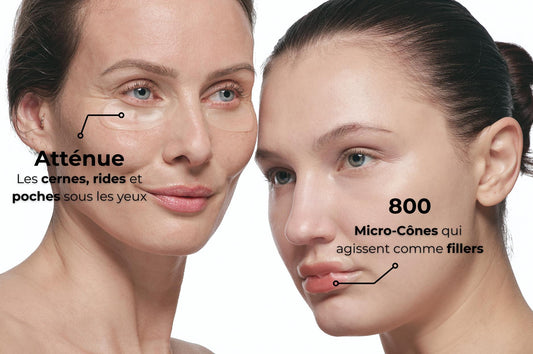
- Micro-cones: these tiny conical structures, made from crystallized active ingredients, gently penetrate the upper layer of the epidermis without causing pain or damage. This method allows for deeper penetration compared to traditional patches.
- Enhanced skin absorption: the unique shape of the micro-cones maximizes contact with the skin, ensuring optimal diffusion of active ingredients directly into the targeted layers. By reducing the skin's natural barriers, this technology significantly increases the effectiveness of the applied treatments.
Crystallization in the form of micro-cones offers a significant advantage in terms of skin absorption. The active ingredients are released gradually and in a controlled manner, allowing for prolonged and more effective action. This innovative process is particularly beneficial for specific applications such as anti-aging treatments and skin regeneration.
This revolutionary technology makes microstructure patches a non-invasive yet powerful solution for improving the appearance and health of the skin, offering a superior alternative to traditional methods.
Detailed comparison between microstructure and traditional patches
Comparison of microstructure and traditional patches: precision vs. limited diffusion
The fundamental difference between microstructure patches and traditional patches lies in how active ingredients are delivered to the skin.
- Traditional patch: active ingredients are deposited on the surface or penetrate the superficial layers of the epidermis. Diffusion occurs passively, meaning that only a fraction of the ingredients actually reaches the targeted cells. This method can limit effectiveness, especially for active ingredients requiring deep penetration.
- Microstructure patch: thanks to crystallized micro-cones, delivery is much more precise. Active ingredients are injected directly into the skin by these tiny structures, allowing for targeted and deep absorption. This mode of administration increases the amount of active ingredients available where they are most useful, optimizing their effectiveness.
Specific applications and benefits for the skin with both types of patches
Microstructure patch
The microstructure patch is particularly effective in the following areas:
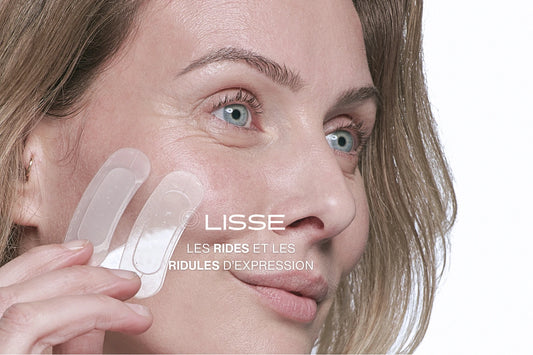
- Anti-aging: thanks to their ability to deliver active ingredients directly into the skin, microstructure patches effectively target wrinkles and fine lines, offering visible results in terms of skin rejuvenation.
- Skin regeneration: micro-cone technology allows regenerating ingredients to be introduced deep into the skin, thus promoting better skin repair and overall improvement of its texture.
Traditional patch
Traditional patches, although less precise in active ingredient delivery, nevertheless offer several advantages:
- Hydration: they are often used to provide immediate hydration to the skin's surface, helping to maintain elasticity and softness.
- Soothing: these patches can contain soothing ingredients that reduce redness and irritation, providing quick relief.
The applications of both types of patches therefore vary according to specific skin needs, whether it's an intensive anti-aging treatment or more general hydration and soothing.
Advantages and disadvantages of each type of patch
Advantages of microstructure patches
- Targeted delivery: active ingredients penetrate deeper thanks to micro-cones, allowing for intense action.
- Aesthetic innovation: microstructure technology leaves few visible traces, which facilitates integration into a beauty routine.
- Enhanced effectiveness: observable results on targeted problems, particularly for anti-aging and regeneration.
Disadvantages of microstructure patches
- Higher price: innovative technology leads to a higher cost than traditional patches.
- Sometimes less intuitive to use: some people may experience slight discomfort during the initial application of micro-cones.
Advantages of traditional patches
- Simplicity of use: quick application without the need for specific explanations.
- Accessible price: ideal if you are looking for an economical solution for regular use.
- Varied formats: available for many uses (hydration, soothing, etc.).
Disadvantages of traditional patches
- Limited effectiveness: penetration restricted to superficial layers, results often less powerful.
- Sometimes temporary effect: surface diffusion can offer ephemeral relief rather than deep treatment.
Conclusion
Choosing between microstructure and traditional patches depends on your specific needs.
- Effectiveness: Microstructure patches offer precise delivery of active ingredients, ideal for targeted treatments such as anti-aging and regeneration.
- Simplicity: Traditional patches are simpler to use and suitable for superficial applications.