Microstructure patches: dermatologists' opinion
There have been anti-pimple patches, retinol patches, "radiance-boosting" patches... and now, a term that sounds a bit scientific, a bit futuristic, is popping up everywhere: microstructure patches. And naturally, when a product promises to "deliver active ingredients" better than creams, you want to believe it. Or at least understand it.
The problem is that the line between serious innovation and well-packaged marketing is sometimes thin. So, I've structured this article as a dermatologist would in a consultation, in a long version: how it works, who it's useful for, what it can truly deliver, and the pitfalls to avoid. No miracles, but no cynicism either.
Microstructure patches: what exactly are we talking about?

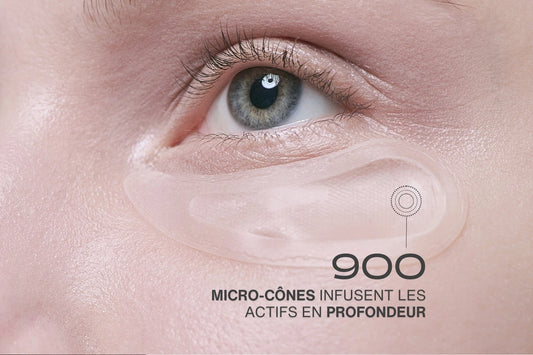
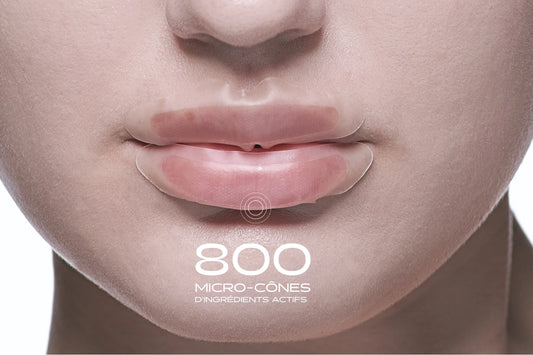
A microstructure patch is an adhesive device containing microstructures, often microneedles, sometimes micro-reliefs in the form of bumps, which create microchannels in the superficial layer of the skin.
And here's an important nuance: for most cosmetic products sold online, we're talking about microneedles that are nothing like those used in a clinic for medical microneedling. They are much smaller, designed primarily to penetrate the stratum corneum (the outermost barrier), then dissolve or soften, releasing active ingredients.
In short: it's a way to improve the penetration of an ingredient, target a specific area, and keep the active ingredient in contact with the skin under good conditions for a certain period.
Why dermatologists are interested
Dermatologists have an obsession, in a good way: the skin barrier. Because skin is designed to keep things out. Even very expensive creams run up against this reality. Many active ingredients remain on the surface, or penetrate poorly, or degrade, or irritate if forced too much.
So the idea of microstructure patches, on paper, is logical: to bypass this barrier a little, but in a controlled way. Not by aggression, not by stripping, but rather by creating micro-passageways.
And there's another point that dermatologists often appreciate: standardization. A well-designed patch delivers a relatively stable dose. Whereas a dab of serum applied "by feel" varies enormously from person to person.
How it works, concretely

Most microstructure patches follow a fairly simple pattern:
- You apply the patch to clean, dry skin.
- The microstructures come into contact with the superficial layer.
- They create tiny puncture points or indentations.
- They release active ingredients, often over several minutes or hours.
- Remove the patch, moisturize if necessary.
Many models use soluble microneedles, made from polymers or sugars, sometimes with hyaluronic acid as a matrix. These microneedles gradually dissolve. The advantage is obvious: no needles left behind, no sharp waste, no technical gesture required.
However, dermatologists point out that manufacturing quality is paramount. The length of the microneedles, their density, their rigidity, the composition, the stability of the active ingredients, the adhesive... if even one element is poorly calibrated, efficacy decreases, and the risk of irritation increases.
What it's best for, according to dermatologists

Microstructure patches promise almost everything. But in dermatological opinion, some uses stand out as more consistent, more "realistic."
Dehydration fine lines and highly targeted areas
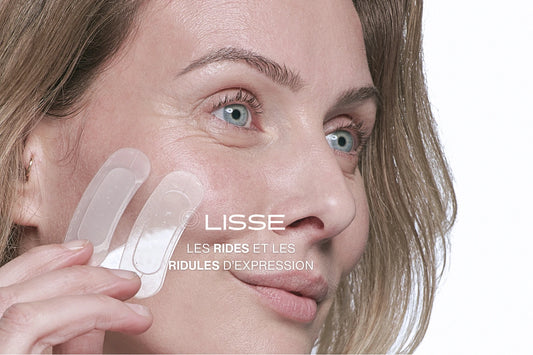
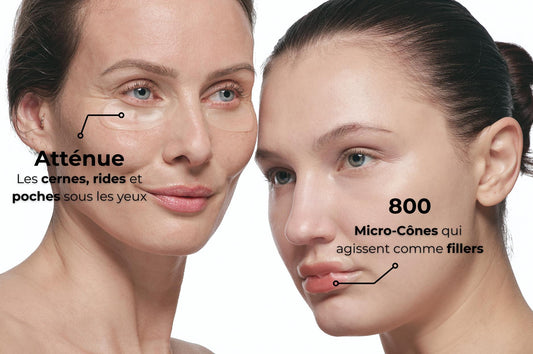
Fine lines around the eyes, very fine creases, areas where the skin is thinner... these are places where a well-formulated patch can provide an interesting effect. Often, it's not a "lifting" effect, but rather a combo: localized hydration + more supple skin + temporary smoothed appearance.
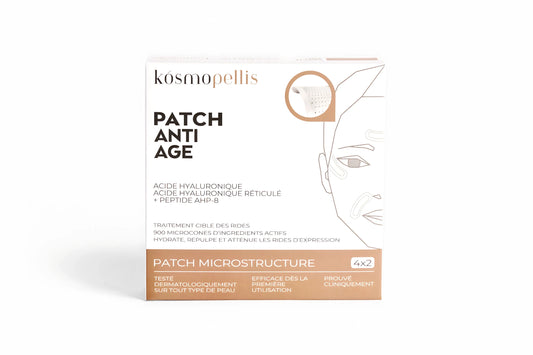
Hyaluronic acid is the classic active ingredient in this case, sometimes combined with peptides. And here, dermatologists largely agree: the effect can be visible, especially on dehydration. But it's not a deep structural correction, and it doesn't replace a global anti-aging strategy.
Acne scars and localized marks
Some microstructure patches target post-acne marks, sometimes with soothing or brightening active ingredients, sometimes with ingredients that support skin repair.
Dermatological opinion is more cautious here, because not all acne marks are the same: post-inflammatory redness, hyperpigmentation, pitted scars... a patch doesn't address everything. However, on a limited area, with good tolerance, it can complement a routine. The keyword is complement.
Inflammatory pimples, occasional use
There are microstructure patches designed for deeper acne lesions, somewhat under the skin, painful pimples that linger. The idea is to deliver an anti-inflammatory or keratolytic active ingredient more effectively.
Dermatologists emphasize two things: Firstly, if it's infected or very inflamed, avoid playing amateur chemist. Secondly, an occlusive or poorly tolerated patch can worsen irritation. So yes, it can help in some cases, but it doesn't replace a long-term treatment if acne is regular.
Spots and hyperpigmentation, with precautions
"Anti-spot" microstructure patches exist. They rely on active ingredients such as niacinamide, vitamin C derivatives, tranexamic acid, kojic acid, arbutin, sometimes retinoids.
Here, dermatologists are divided: targeting is interesting, but tolerance depends heavily on the formula, and the risk is localized irritation. And irritation can sometimes lead to pigment rebound, especially on darker skin types. So, if you are prone to post-inflammatory hyperpigmentation, be careful, test, and most importantly, use photoprotection.
What microstructure patches don't do, despite what you sometimes read
This is where dermatological advice is most useful, because it cuts short fantasies.
- No, it doesn't replace injections.
- No, it doesn't "remodel" a facial oval.
- No, it doesn't treat rosacea or serious melasma on its own.
- No, just because it stings a little doesn't mean it's more effective.
And one phrase often comes back: if the promise is spectacular, the tool is probably misunderstood, or the advertising is aggressive.
Microstructure patches can improve active ingredient delivery to a small area. That's already quite good. But it's not a magic wand.
How to choose a microstructure patch without being fooled
Let's be honest, the market is uneven. Some products are serious, others are gadgets.
Concrete criteria, quite similar to what a dermatologist would say:
1. Look at the active ingredients, not the slogans
"Collagen" in large print on the box doesn't mean much. Collagen in cosmetics primarily moisturizes; it doesn't rebuild your dermal collagen on its own. Look instead for: specific peptides, hyaluronic acid, niacinamide, anti-inflammatory active ingredients, well-dosed retinoids, etc.
And above all: the INCI list must exist and be legible.
2. Beware of overly complex formulas
The more "wow" active ingredients in a patch, the more uncertain the tolerance. Sometimes a simple formula works better. Hyaluronic acid + a peptide is basic, but often safer.
3. Check the usage logic
A microstructure patch is not necessarily meant to be worn for 24 hours. Some are worn for 2 hours, others overnight. If the instructions are vague, or if you're told "wear it whenever you want for as long as you want," that's a red flag.
4. Beware of counterfeits
This is a real issue on some marketplaces. If the product is a copy, you don't know what's in it, or how it's made. And there, we move from "low-risk" cosmetics to anything goes. Dermatologists, of course, don't like that.
Results: what to really expect
Dermatologists' opinions are often nuanced, but they converge on a simple idea: microstructure patches can yield good results for targeted and measurable objectives, especially regarding hydration, surface appearance, and certain inflammatory signals. However, they do not profoundly transform the skin in just a few uses.
In practice, here's what many people observe when the product is well-chosen:
- Plumper skin in the treated area, especially around the eyes
- Dehydration fine lines slightly blurred
- Pimple less tight, less painful, sometimes faster to "mature" or flatten
- Makeup that creases less in a specific area for a day or two
And here's what often disappoints:
- Overly high expectations for established wrinkles
- Lack of change on old spots without a global routine
- Local irritation that ruins everything
Microstructure patches vs. in-office microneedling: don't confuse them

This is a point dermatologists reiterate because confusion is rampant.
Medical microneedling, performed in-office, uses longer needles, creates controlled dermal stimulation, and can improve texture, scars, pores, and some wrinkles, within a complete protocol. There are indications, contraindications, and follow-ups.
Microstructure patches, on the other hand, are primarily a technology for delivering active ingredients, superficial and localized. They can be very useful, but they don't play in the same league. Not the same objective, not the same level of effect, not the same supervision.
The final word, dermatologist-style realism
Microstructure patches are not just hype. It's a solid idea, and in some cases, it's quite clever. But it's not automatic. Everything depends on the product, your skin, your routine, and what you expect.
If you want simple advice, which aligns well with dermatological opinion: choose a patch with few but well-chosen active ingredients, use it calmly, not frantically, and take tolerance seriously. Healthy skin is skin that you don't irritate to gain two days.
And if you're torn between "I'll try it" and "I'm afraid of making it worse": keep it simple. Local test, a single use, then observe. Skin responds quickly when it doesn't like something. And when it likes it, it shows that too.
Frequently asked questions
What is a microstructure patch and how does it work?
A microstructure patch is an adhesive device containing microstructures, often soluble microneedles, which create tiny microchannels in the superficial layer of the skin (the stratum corneum). These microneedles penetrate this barrier to gradually release targeted cosmetic active ingredients, thereby improving their penetration and efficacy without pain or sharp waste.
Why are dermatologists interested in microstructure patches?
Dermatologists appreciate microstructure patches because they allow for controlled circumvention of the skin barrier, facilitating better penetration of active ingredients. Additionally, these patches offer standardization in the delivered dose, unlike manual applications of creams or serums, which vary from person to person.
What are the advantages of microneedles used in cosmetic patches compared to medical microneedling?
The microneedles in cosmetic patches are much smaller than those used in medical microneedling. They are primarily designed to penetrate the stratum corneum and dissolve or soften to release active ingredients without causing skin aggression or pain, thus offering a gentle and effective method to improve ingredient penetration.
For which types of skin problems are microstructure patches particularly effective according to dermatologists?
Microstructure patches are particularly effective for treating dehydration fine lines around the eyes and other highly targeted areas where the skin is thin. They provide localized hydration, improve skin suppleness, and offer a temporary smoothing effect, especially thanks to active ingredients like hyaluronic acid and sometimes peptides.
What criteria guarantee the effectiveness and safety of a microstructure patch?
Manufacturing quality is essential: the length, density, and rigidity of the microneedles, the composition and stability of the active ingredients, and the adhesive used must be perfectly calibrated. Incorrect dosage or poor design can reduce the patch's effectiveness and increase the risk of skin irritation.
How to properly use a microstructure patch to optimize its benefits?
To optimize the benefits, the patch should be applied to clean, dry skin so that the microstructures penetrate effectively. The patch remains in place for several minutes to hours to allow for the gradual release of active ingredients. After removal, it is advisable to moisturize the skin if necessary to support the treatment's effect.