Why lips age faster than the rest of the face
It's often noticed a little too late. One morning, lipstick bleeds into fine lines. A photo taken in profile reveals, oh, the contour is less sharp. Or maybe it's that persistent feeling of dryness, even when you drink enough water.
Lips have this peculiar reputation for "betraying" age faster than the rest of the face. And it's not just an impression. Anatomically, biologically, and even in how we mistreat them daily, they start with a handicap.
I'll explain it simply, without beating around the bush. And also tell you what to do, because otherwise, what's the point?
What makes lips different from the start
The skin on the lips is not like the skin on the rest of the face. It's thinner, more fragile, and above all, less equipped.
Firstly, the stratum corneum (the protective barrier on the surface) is much thinner. The result: water evaporates more easily, irritants penetrate faster, and cold or wind are felt immediately. You see the point: it reacts, all the time.
Secondly, there's a crucial point: lips have very few sebaceous glands, sometimes almost none. So they produce very little sebum. However, sebum isn't just "grease": it's a natural protection, a film that limits dehydration and helps the skin stay supple.
And then they have less melanin than the rest of the face. Melanin is the pigment that partially protects against UV rays. Less melanin means less natural defense against the sun. And that's one of the main reasons for accelerated aging.
The sun: enemy number one, and it's insidious
When we talk about aging, we think wrinkles, loss of firmness, spots. And in many cases, the main cause isn't "time" itself, it's photoaging.
UV rays degrade collagen and elastin. They also weaken microcirculation and increase local inflammation. On the lips, as the skin is thin and poorly protected, the damage is seen more quickly.
What's insidious is that almost no one regularly puts SPF on their lips. We sometimes protect our face, neck, hands. But our lips take it all.
And be careful: even if you're not going "to the beach." UV rays penetrate in the city, on terraces, in cars. And even when it's cold. Exposed lips take a beating.
Another detail we think about less: the area just above the upper lip, the Cupid's bow and the famous "barcode" lines. This area is very sensitive to UV rays. And since we move our mouths a lot, it shows signs of aging faster.
Repeated movements: talking, eating, smiling... and puckering
We use our lips constantly. They move when we talk, chew, drink, laugh. Over time, this creates expression lines, just like around the eyes. Except that the original material is more fragile.
And there are movements that accelerate the process even further:
- Puckering lips to drink through a straw
- Smoking (and there it's the combo: repetitive movement + heat + toxins + vasoconstriction)
- Biting or pinching lips out of stress
- Exaggerated "kisses," certain facial tics
This doesn't mean you should stop smiling, of course. But it explains why this area shows signs of aging quickly, especially if the skin is already dry or damaged.
Dehydration: a very real vicious cycle
Lips dehydrate easily, and dehydration accentuates all fine lines.
When they lack water, they contract slightly, lose their smooth appearance, and small lines become visible. And the more fine lines you have, the more your lipstick bleeds. And the more your lipstick bleeds, the more you rub or remove makeup vigorously. And the more you weaken the area.
Vicious cycle.
Add to that dry air (heating in winter, air conditioning in summer), wind, salt, and even some very drying matte lipsticks... and you get lips that "age" in appearance, even in a young person.
We lick our lips... and damage them
It's almost automatic. When it feels tight, we lick our lips. It provides a second of relief, then makes it worse.
Saliva contains digestive enzymes, designed to break down food. On the thin skin of the lips, it's irritating. And when saliva evaporates, it takes even more water with it. So, ultimately, you dry out the area even more.
And when it's irritated, we keep at it, scratch, pick at a bit of skin. Micro-inflammations. Micro-lesions. And the barrier becomes even weaker.
Over time, an area that often gets inflamed shows signs of aging faster. It's subtle, but it's a known mechanism: chronic inflammation accelerates skin aging.
Lip contour loses definition with age

Another point that makes us say "it's aging": the contour becomes less defined.
With age, we lose collagen, but also natural hyaluronic acid and volume in the perioral area. The vermilion (the red part) may appear thinner, more "shrunken." The corners of the mouth may drop slightly. And the small light border of the contour, the one that defines the lip, becomes less contrasted.
It doesn't happen all at once. It's gradual. But in a photo taken a few years apart, it's obvious.
And the frustrating thing is that even if the rest of the face looks good, the lips can give a different indication, because they accumulate: dryness, exposure, movement, loss of volume.
Some products worsen things without us realizing it
Sometimes, we think we're doing good.
Highly scented, mentholated, camphorated, or "plumping" balms can provide a pleasant sensation or an immediate effect. But they often rely on slight irritation to make the lips swell a little. In the long run, on sensitive lips, this sustains inflammation.
The same goes for some very drying long-lasting lipsticks. They can be beautiful. But if you don't compensate with a proper routine afterward, your lips will get lines, become streaky, and you'll end up piling on balm all day just to survive.
Another trap: overly frequent or abrasive scrubs. A gentle, occasional scrub, okay. But rubbing hard "to smooth" already thin lips is like sanding an already fragile table.
Lifestyle: what quickly shows on the lips
The lips also quickly reflect certain general factors:
- Tobacco: less oxygenation, more free radicals, perioral wrinkles, dull complexion
- Alcohol: dehydration, inflammation
- Sleep: less effective skin repair
- Stress: lip-biting tics, inflammation, slower recovery
- Deficiencies: certain deficiencies (iron, B vitamins) can weaken mucous membranes, even if this is not the main cause of aging
This isn't about morality. Just mechanics. Because they have little margin, lips absorb everything faster.
What you can do concretely, without complicating your life
1) Really put SPF on your lips
This is the most cost-effective step.
Choose a lip balm with at least SPF 30, SPF 50 if you are often outdoors. And reapply like a classic sunscreen, especially if you eat or drink. Yes, it's inconvenient. But it is literally what slows down visible aging the most.
And if you wear lipstick: you can apply an SPF stick as a base, let it set a bit, then apply makeup. Or choose lipsticks with sun protection, even if the protection is often less reliable than a true SPF stick.
2) Focus on repair, not "sensational" products
In the evening, use a simple, repairing balm, preferably fragrance-free. Ingredients that generally work well: petroleum jelly (petrolatum), lanolin, stable plant butters, ceramides, squalane.
The goal: strengthen the barrier, limit water loss, and allow the skin to repair itself.
And if you're the type to wake up with dry lips: apply a slightly thicker layer in the evening. No need for an expensive product. Just something effective.
3) Avoid chronic irritants
If you have a balm that makes you "tingle" and you reapply it every hour... be wary. The same goes for highly mentholated formulas. Try a two-week break with a neutral formula and see the difference.
4) Don't over-exfoliate
If you want to smooth them: do it very rarely, and very gently. A warm damp towel, a light pass, then balm. Done.
And if your lips are peeling a lot, it's not necessarily "you need to exfoliate," it's often "you need to repair."
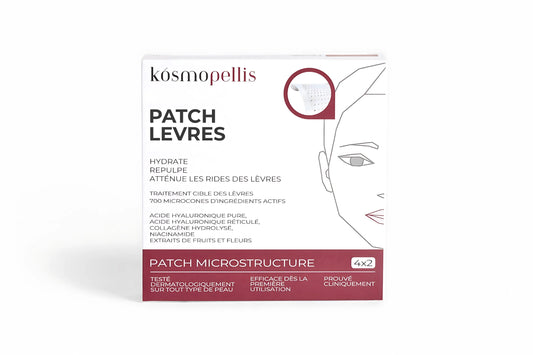
5) Incorporate a deeper targeted treatment: microstructure lip patches
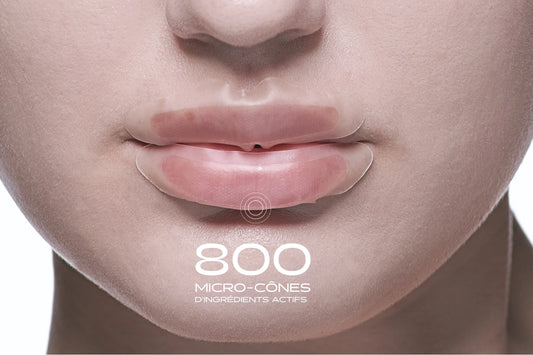
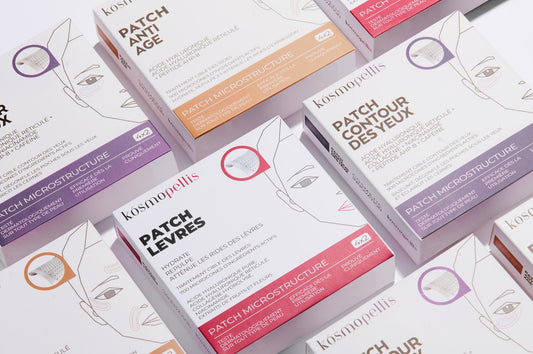
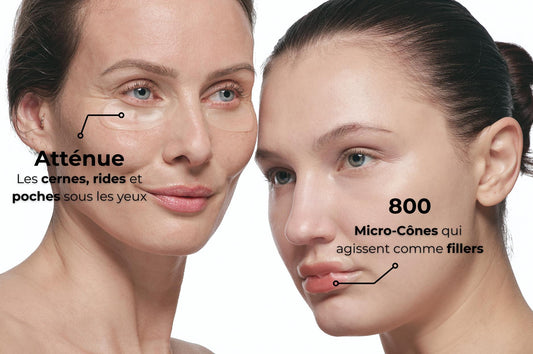
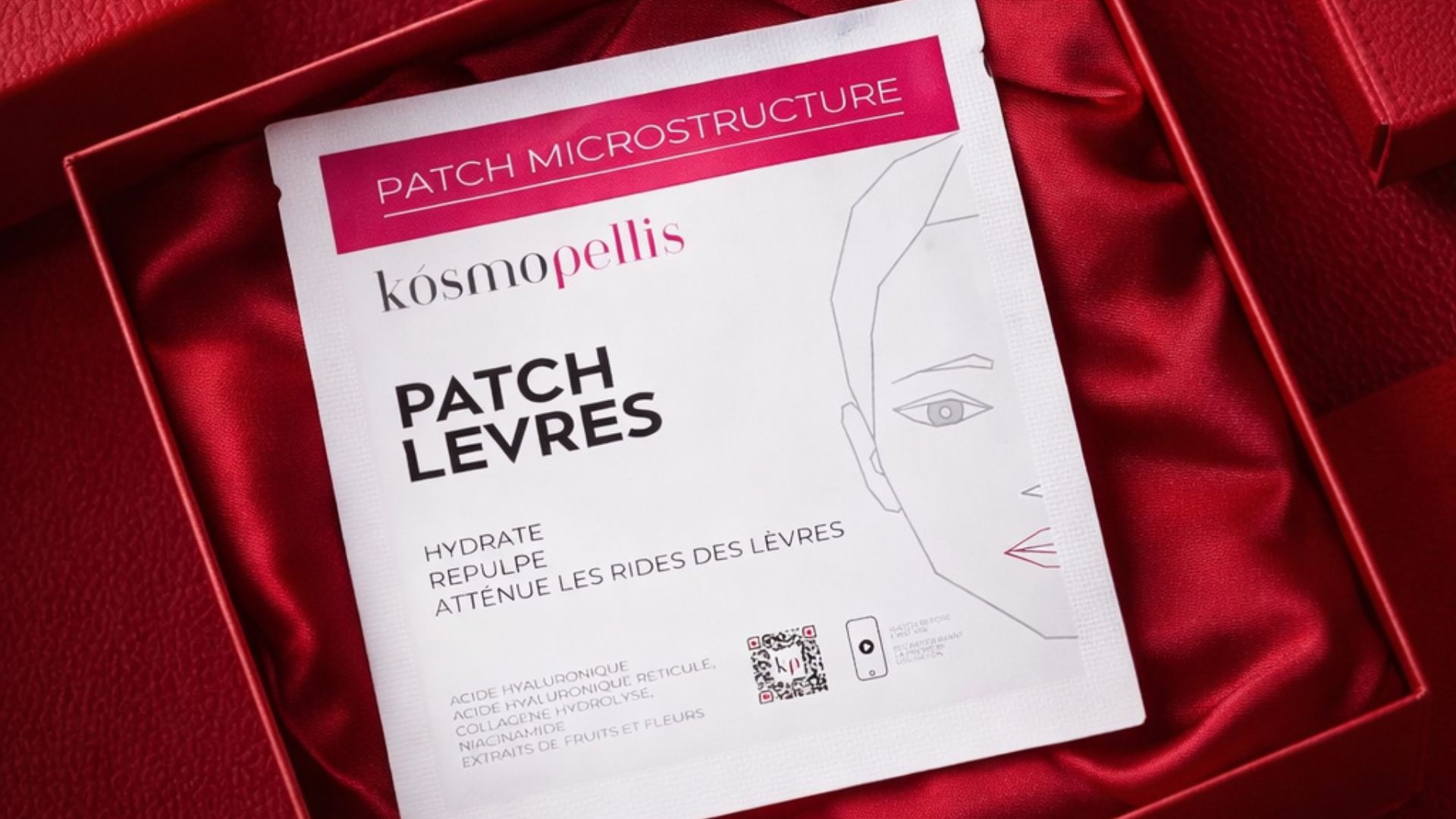
If you want to go beyond surface hydration, Kōsmopellis microstructure patches are an interesting option.
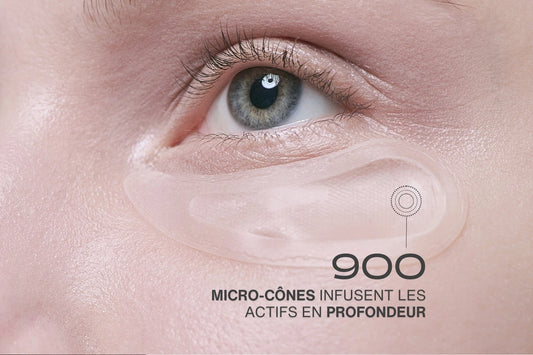
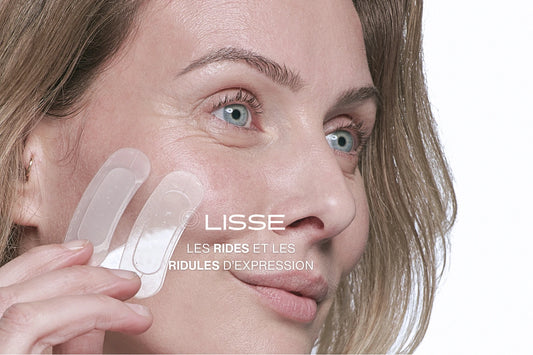
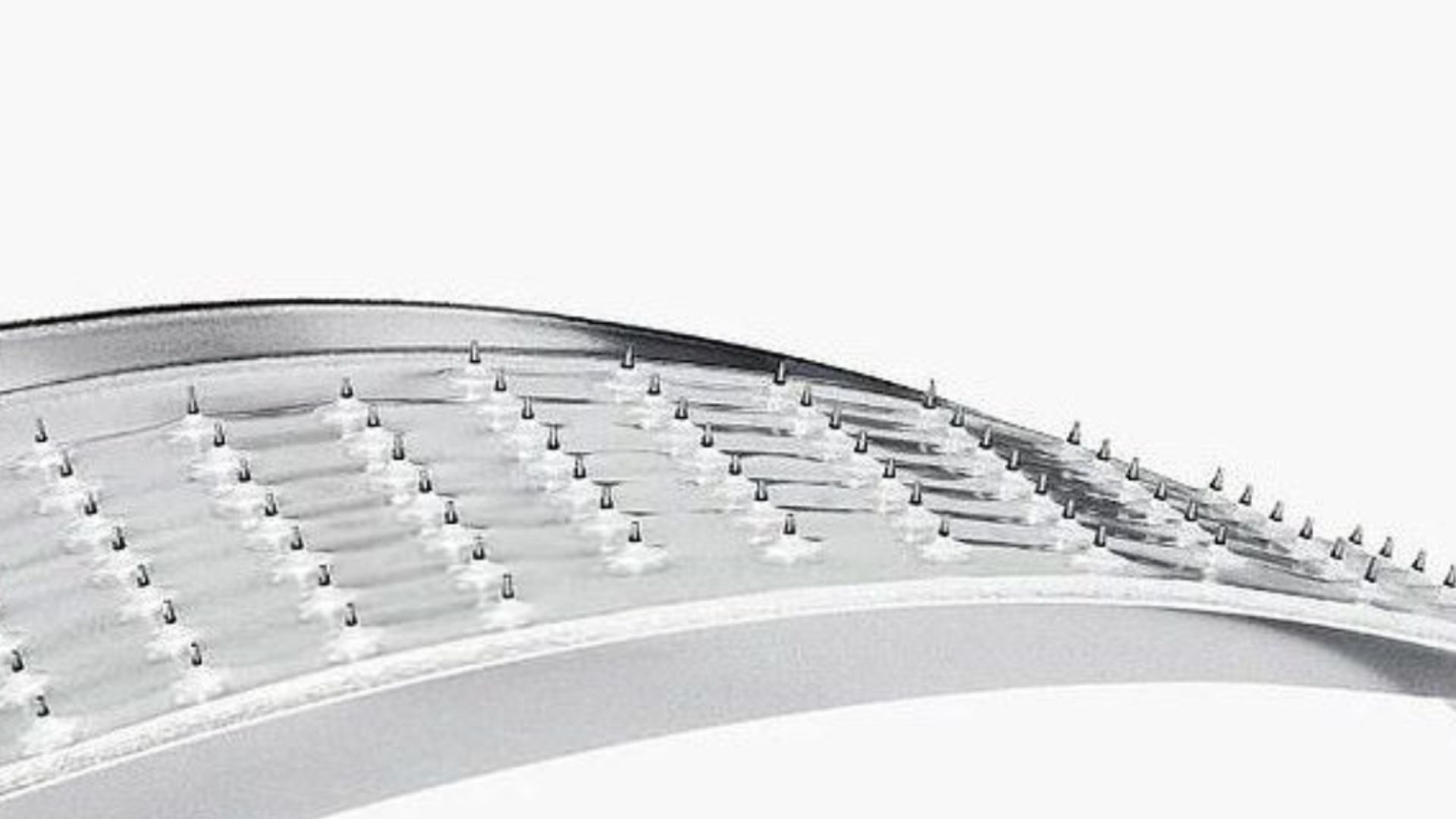
The principle: self-dissolving micro-cones deliver active ingredients (such as hyaluronic acid, peptides, panthenol...) directly into the superficial layers of the skin. Where a balm stays on the surface, this type of patch acts deeper.
Result: more intense hydration, a visible plumping effect, and improved lip texture.
It's not an everyday gesture like a balm, but rather a one-off treatment, to be done for example before an event or as a course of treatment to smooth and boost the lips.
6) Consider the area around the lips
Lip aging is also perioral aging.
When you apply your facial skincare (moisturizer, antioxidants), you can gently extend it around the mouth, avoiding putting very irritating active ingredients directly on the vermilion itself. For example, some retinoids can be too aggressive on the contour, especially at first. You need to go gradually and listen to your skin.
7) If you want to go further: medical options, but do it right
I'll say it plainly: some people can apply SPF and balm all they want, but the loss of volume and collagen breakdown will eventually show.
In this case, there are options like hyaluronic acid (to restore volume or redefine a contour), or resurfacing treatments around the mouth. But that's a whole other topic, and it requires a serious practitioner, a light approach, and a real discussion about the desired outcome. Over-corrected lips are also noticeable. Very quickly.
In short, why it goes faster
Lips age faster because they are thinner, less protected, less oily, and more exposed. They move all the time. They are exposed to the sun without protection. And we irritate them without realizing it, between products, licking, and habits.
The good news is that you can slow this down quite simply: lip SPF, evening repair, fewer irritants, and a bit of common sense.
It's not magic. It doesn't stop time. But it really changes the trajectory. And besides, comfortable, supple lips that don't feel tight... that's already a luxury, frankly.
Frequently asked questions
Why do lips show signs of aging faster than the rest of the face?
Lips have thinner, more fragile skin, a very thin stratum corneum, very few sebaceous glands producing protective sebum, and less melanin to defend against UV rays. These anatomical and biological characteristics make lips more vulnerable to accelerated aging.
How does the sun affect lip aging?
The sun is the number one enemy of lip aging. UV rays degrade collagen and elastin, weaken microcirculation, and increase local inflammation. Since the skin on the lips is thin and poorly protected, this damage appears quickly, especially if SPF is not applied regularly to the lips.
What daily movements contribute to the appearance of wrinkles around the lips?
Repeated movements such as talking, eating, smiling, puckering lips to drink through a straw, smoking, biting or pinching lips due to stress, as well as certain facial tics accelerate the formation of expression lines around the lips due to the fragility of their skin.
Why do lips tend to dry out easily?
Lips have a very thin stratum corneum that allows water to evaporate easily. In addition, they produce little to no sebum, which is a natural protective film that limits dehydration. These combined factors make lips particularly vulnerable to dryness.
How does dehydration create a vicious cycle on the lips?
When lips lack water, they contract and lose their smooth appearance, causing fine lines to appear. These fine lines cause lipstick to bleed into the creases, encouraging rubbing or vigorous makeup removal, which further weakens the area and accentuates dehydration.
What precautions should be taken to protect lips from premature aging?
It is essential to regularly apply a lip balm with SPF to protect against UV rays, even in the city or in cold weather. Avoiding aggressive gestures such as vigorous rubbing or pinching the lips, maintaining good hydration, and limiting harmful repetitive movements also contribute to preserving the youthfulness of the lips.