Anti-wrinkle patches: how to choose the right technology?
We've all had that moment in front of the mirror. The morning light, not very forgiving. And there, you see a wrinkle a little more pronounced than the day before. So you type "anti-wrinkle patches" into Google, and you find... everything. Collagen, silicone, microneedles, hydrogel, express "lifting," 8-hour effects, 28-day effects. Honestly, it quickly becomes a mess.
The problem isn't that there aren't good patches. It's more that the word patch covers very different technologies. Some hydrate, some mechanically smooth, some deliver active ingredients, some prick a little (yes), and some do a bit of everything but not always very well.
So let's keep it simple. Not simplistic, but simple. We're going to break down the main anti-wrinkle patch technologies, what they really do, for whom they work best, and how to choose without being fooled by an overly brilliant promise.
Understanding What a Patch Can Really Do
Before talking about silicone, collagen, or microneedles, we need to lay a foundation.
A wrinkle can be linked to several things: dehydration, collagen loss, sagging, repeated contractions (expression lines), UV damage, chronic inflammation, glycation... in short, a wrinkle isn't always the same wrinkle.
And a patch, by definition, mainly acts on the surface. It can:
- hydrate and plump temporarily (dehydration fine lines respond very well to this)
- smooth mechanically (a bit like a soft splint)
- create an occlusion that boosts the penetration of active ingredients you've already applied underneath
- deliver active ingredients integrated into the patch, but here... it heavily depends on the technology
- gently stimulate via microneedles or micro-reliefs
What a patch generally won't do: rebuild a dermal matrix like a medical procedure would. So if you're looking for injection or laser-like results, no. But if you want to smooth, freshen up, improve the appearance of a specific area, then yes, it can be quite impressive.
Silicone Patches: Mechanical Smoothing and "Plaster Effect"
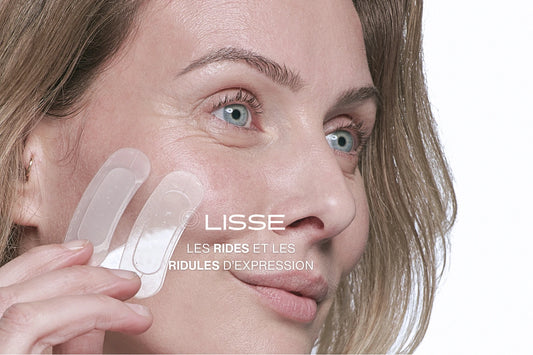
Silicone patches are the most logical technology to understand. They primarily work through two mechanisms:
- occlusion: they limit water evaporation, so the skin stays more hydrated
- mechanical smoothing: they keep the area more immobile, especially at night
They are often used on the forehead, frown lines, nasolabial folds, and neck. And also on scars in medicine, by the way, silicone has a real history there.
Who is it good for?
- light to moderate expression lines
- skin that easily creases upon waking
- people who want something reusable, minimalist
Points to watch out for
- adhesion: if it peels off, you lose the benefit
- oily or very creamy skin: on skin that is too rich in sebum or if you apply a very occlusive cream underneath, it sticks less
- irritations: rare, but possible if you have reactive skin and maintain occlusion for too long
Typical result
A fairly visible smoothing effect upon waking. But it's not magic on a deep-set wrinkle. It's more of a "I look less creased" effect, which, honestly, is already quite good.
Hydrogel Patches: Fast Hydration, Comfort, Radiance Boost
You're probably familiar with hydrogel patches as eye contour patches. They are soaked in water, often with glycerin, hyaluronic acid, caffeine, peptides, niacinamide... depending on the formula.
Hydrogel is a bit like the "at-home spa" technology. It refreshes, decongests, and plumps. And it's super pleasant.
Who is it good for?
- dehydration fine lines
- light puffiness, fatigue, creased eyes
- skin that feels tight or lacks moisture
Points to watch out for
- hold: some slide, especially if you move
- low-dose active ingredients: many patches primarily hydrate and provide little treatment
- short-term effect: often very visible... then it diminishes a bit during the day
Simple tip
Put the patches in the fridge. It sounds silly, but the decongestant effect is really more pronounced.
Microneedle Patches: Targeted Stimulation and Delivery
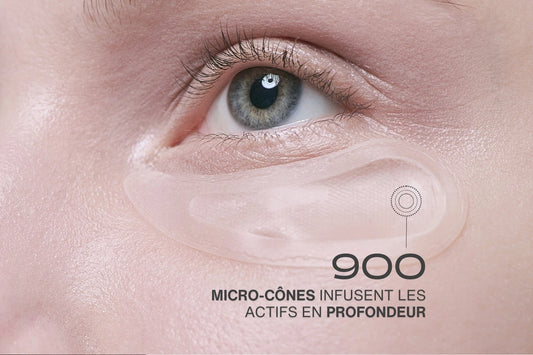
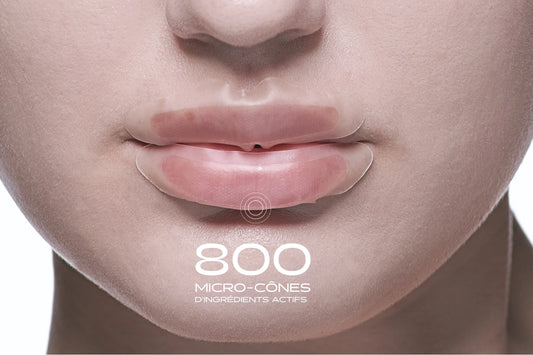
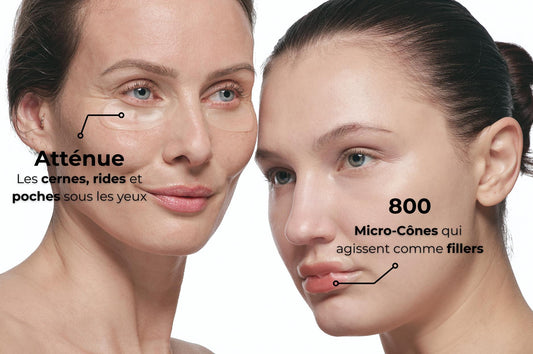
Here, we're entering a category that's quite intriguing. Microneedle patches (often made of solidified hyaluronic acid, sometimes with peptides) have micro-points that dissolve upon contact with the skin. The idea: to cross the skin barrier more effectively than a classic patch.
So, let's be clear: these are not needles like in a clinic, nothing like that. But you might feel a slight tingling. And on some skin types, it might redden a bit.
Who is it good for?
- localized wrinkles: crow's feet, frown lines, fine lines
- skin that isn't too sensitive
- people who want a real "treatment" and not just a hydration boost
Points to watch out for
- manufacturing quality: this is crucial, otherwise the microneedles don't penetrate well or dissolve poorly
- price: often more expensive, as it's typically for occasional, non-reusable use
Typical result
Often more gradual. You can get a pretty neat plumping effect on small wrinkles, especially if you do a short course of treatment. But again, a wrinkle that's been there for 15 years won't disappear.
Collagen Patches: Marketing vs. Reality, but Not Always Useless
Collagen in cosmetics is a delicate subject. The molecule is too large to penetrate deeply. So if a patch promises "collagen production in 10 minutes," be wary.
That said, a collagen patch can still:
- hydrate (depending on the patch base)
- form a film that temporarily smooths
- improve surface suppleness
So... yes, it can be pleasant and give a visible result. But you need to understand that the effect comes more from hydration and the film than from deep reconstruction.
Who is it good for?
- dry skin
- superficial fine lines
- people who want a "cocooning" patch without a feeling of tightness
Points to watch out for
- overly medical claims
- poor ingredient lists: if it's just "collagen" without serious humectants, then meh
Choosing by Area: You Don't Treat the Forehead Like the Eye Contour
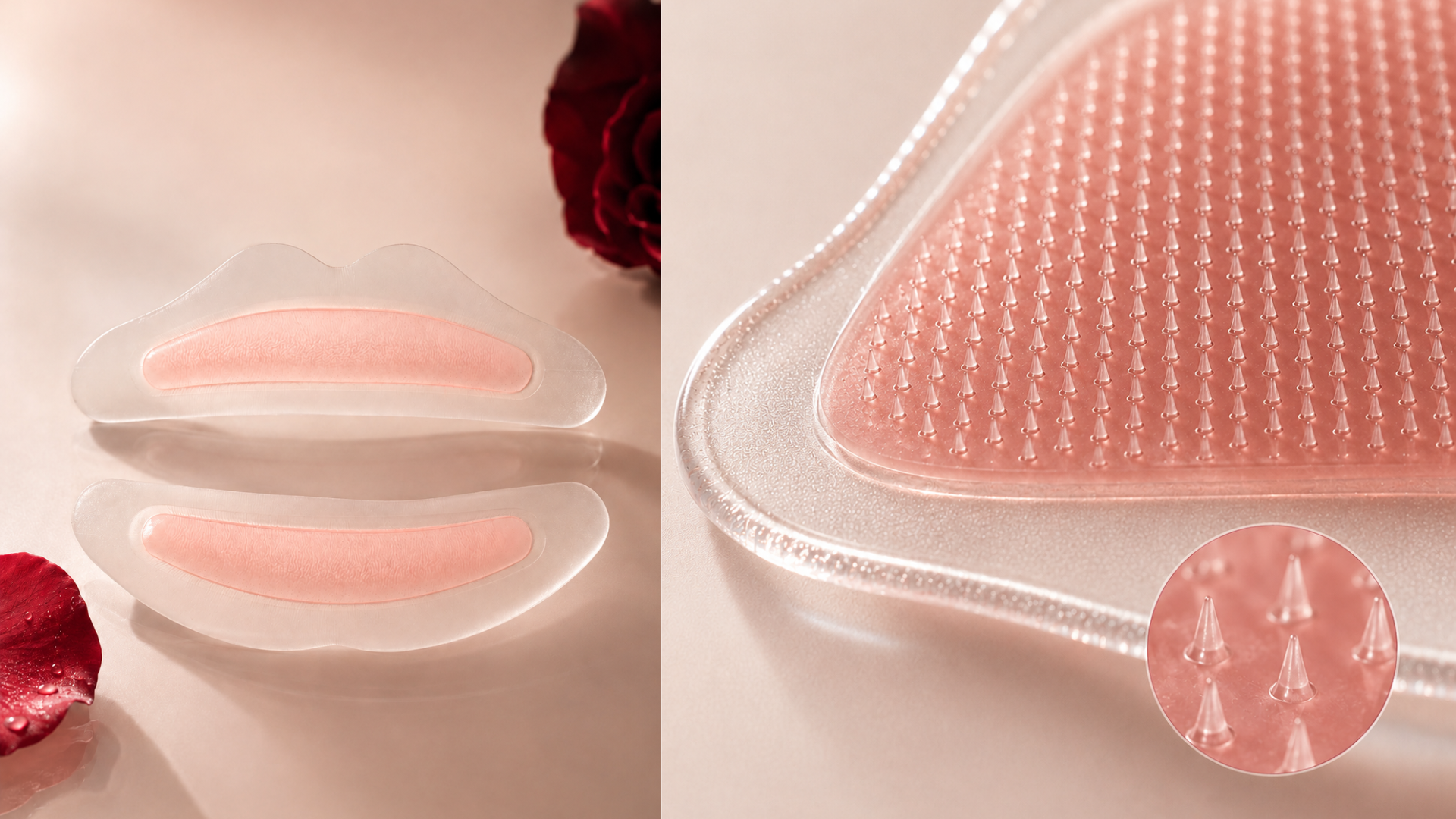
This is where many go wrong. A generic anti-wrinkle patch exists, but different areas of the face have different needs.
Eye Contour
Thin, fragile skin, easily irritated.
- hydrogel: excellent for depuffing and smoothing
- microneedles: Excellent for deep treatment
- silicone: sometimes too rigid or not suitable for the shape
Forehead and Frown Lines
Area of expression, muscle contraction.
- silicone: very good choice, especially at night
- occlusive films: ok with a hydrating serum
- microneedles: effective for targeted use, rather as a course of treatment
Mouth Contour and Nasolabial Folds
Mobile area, sometimes dehydrated skin, sometimes marked.
- hydrogel: good for plumping
- microneedles: interesting for fine vertical wrinkles
- silicone: can help, but requires good adhesion
Neck and Décolleté
Thin skin, often sun-damaged, "accordion" folds.
- silicone: useful for mechanical smoothing
- occlusion + hydration: simple and effective combo
- microneedles: possible, but pay attention to sensitivity
Choosing According to Your Goal: Immediate Effect or Progressive Improvement
What exactly do you want? It's a silly question, but it prevents 80% of bad purchases.
If you want a "tomorrow morning" effect
- silicone (especially at night)
- hydrogel (before an event, for prettier makeup)
- occlusive film + hydrating serum
If you want a more cumulative effect
- microneedles (as a course of treatment)
- patches with serious peptides, but ideally combined with a consistent routine
And yes, the routine matters. A patch once a week on continuously dehydrated skin is like mopping a floor without fixing the leak.
How to Recognize a Good Patch Without Being a Chemist
Some simple, very concrete criteria.
1) The technology must be clear
If the brand doesn't state whether it's silicone, hydrogel, microneedles, or just an impregnated fabric... that's a bad sign. We're not asking for a patent, but a minimum of transparency.
2) The promise must be reasonable
"Erases all deep wrinkles": no.
Prefer promises like: smooths, plumps, improves appearance, intensely hydrates.
3) The INCI list must make sense
For a hydrogel, you want to see humectants: glycerin, butylene glycol, sodium hyaluronate, panthenol.
For a "treatment" patch, peptides (palmitoyl tripeptide, acetyl hexapeptide), niacinamide, adenosine... why not.
And if it's pure silicone, it's almost "normal" for the INCI to be short. Here, it's the material that does the job.
4) Adhesion and shape
A poorly cut, too small, or creased patch is a useless patch. Especially on the forehead and neck.
5) Tolerance
If you have reactive skin, start with:
- mild, fragrance-free hydrogel
- silicone for a limited time
- avoid microneedles at first, or do a test on a small area
How to Use Them to Avoid the Opposite Effect
Yes, the opposite effect exists. A patch can irritate, dehydrate afterward (if alcohol is present or if you cleanse too much), or cause small pimples under occlusion.
Some simple rules:
- clean and dry skin before silicone or microneedles
- under hydrogel: you can apply a light serum, but not a thick layer
- application time: respect it, especially for microneedles
- do not rub when removing: pat, hydrate
- if redness persists: stop, period
And one detail many forget: SPF. Because smoothing a wrinkle and letting the sun damage the skin afterward is a bit like ironing a shirt in the middle of a storm.
Finally, an Honest Opinion
Anti-wrinkle patches can be very good. But you have to stop seeing them as a magic wand. See them as a tool. A good tool, sometimes super satisfying, especially when you have an area that bothers you and you want a visible result without getting into heavy procedures.
First choose the technology, then the area, then your goal. And only then, the brand.
And if you're still hesitating between two types, think of it this way: silicone for mechanical smoothing, hydrogel for hydrating and brightening, microneedles for pushing a little further. It's often as simple as that, in reality.
Frequently Asked Questions
What can an anti-wrinkle patch really do for the skin?
Anti-wrinkle patches primarily act on the surface. They can temporarily hydrate and plump, mechanically smooth the skin, create an occlusion that boosts the penetration of active ingredients you've already applied underneath, deliver active ingredients integrated into the patch depending on the technology used, and gently stimulate the skin via microneedles or micro-reliefs. However, they cannot rebuild the dermal matrix like a medical procedure such as an injection or laser.
How do silicone patches work against wrinkles?
Silicone anti-wrinkle patches work by occlusion, limiting water evaporation to keep the skin hydrated, and by mechanical smoothing, keeping the area more immobile, especially overnight. They are effective on light to moderate expression lines and provide a visible smoothing effect upon waking.
For what type of wrinkles are hydrogel patches recommended?
Hydrogel patches are ideal for dehydration fine lines, light under-eye puffiness, tired eyes, and skin that feels tight or lacks moisture. They provide rapid hydration, a radiance boost, and a spa-like comfort at home.
What are the points to watch out for when using silicone patches?
You need to check the adhesion of the patch because if it peels off, its effectiveness decreases. Oily or very creamy skin may experience adhesion problems. Additionally, although rare, irritations can occur if occlusion is maintained for too long on reactive skin.
Why does the term 'anti-wrinkle patch' encompass several different technologies?
The word 'patch' covers several varied technologies: some hydrate, others mechanically smooth, some deliver integrated active ingredients, others stimulate via microneedles. This diversity explains why there are a multitude of products with different effects and why it is important to understand how they work before choosing.
How to choose an anti-wrinkle patch without being misled by overly attractive promises?
First, identify the type of wrinkle (dehydration, collagen loss, expression lines...) then choose a patch suited to that goal. Understanding that patches mainly act on the surface and do not replace medical treatment is essential. Also check the technology used (silicone, hydrogel, microneedles), their actual mechanisms of action, and be wary of exaggerated promises regarding the duration or intensity of effects.